
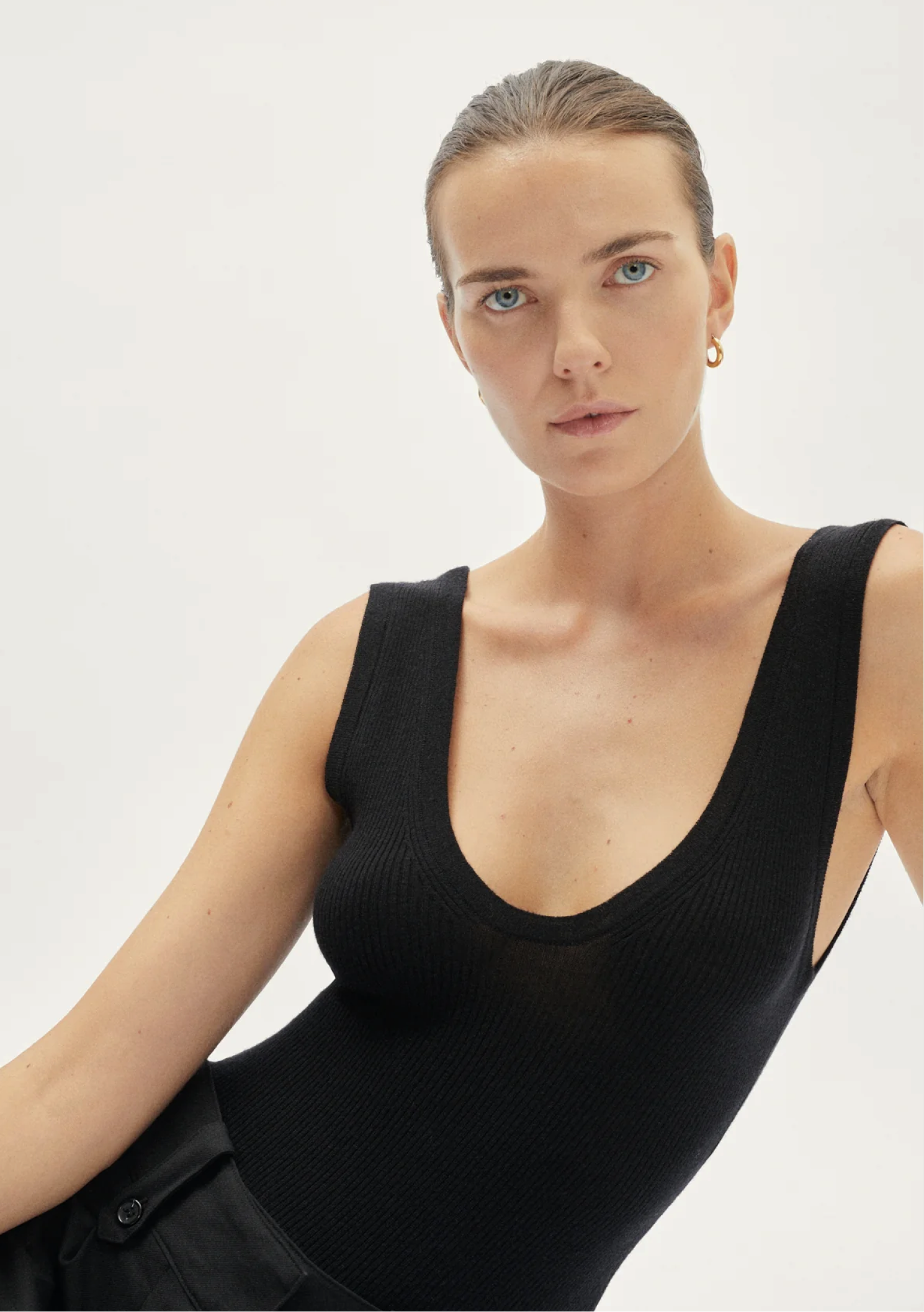
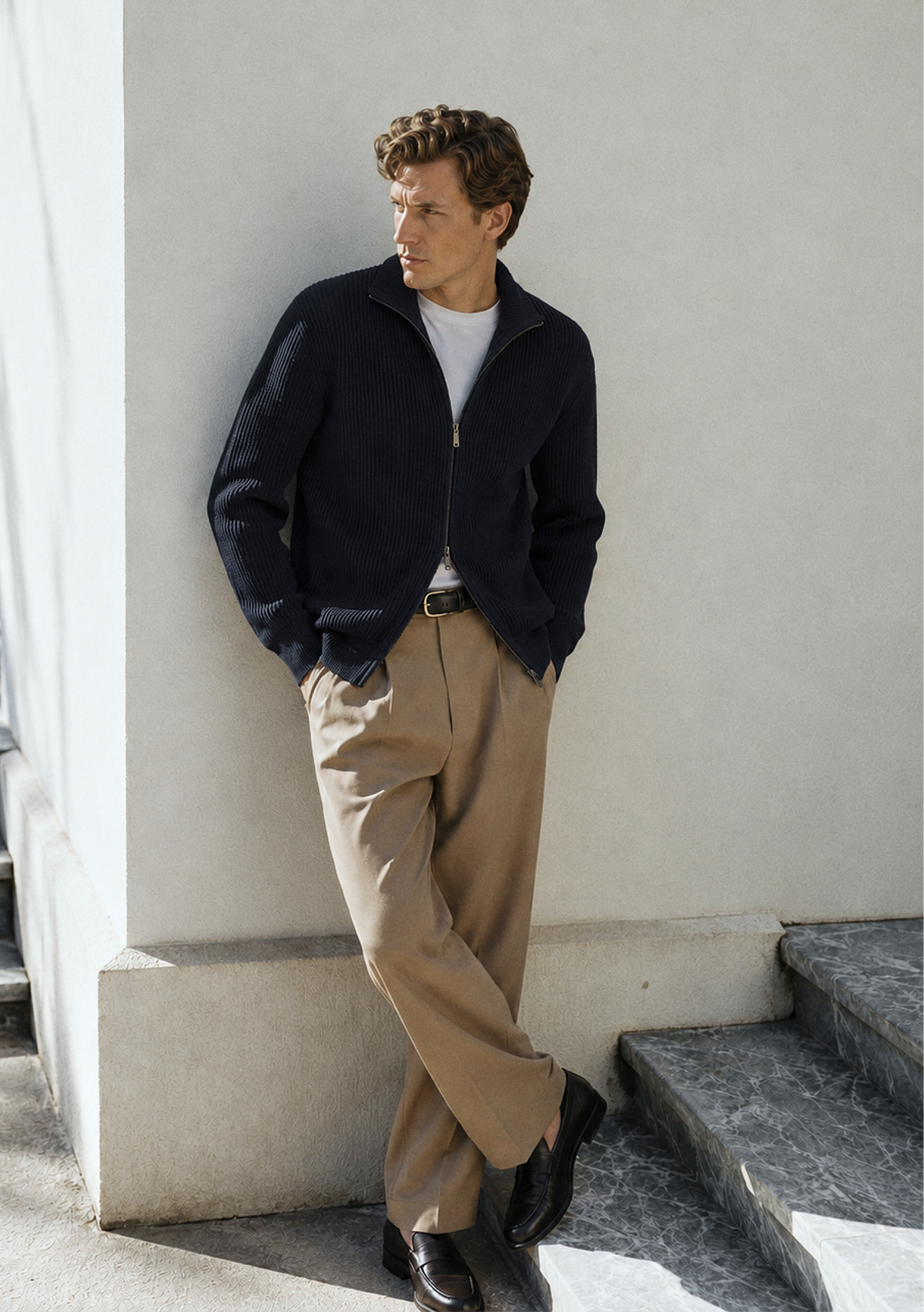
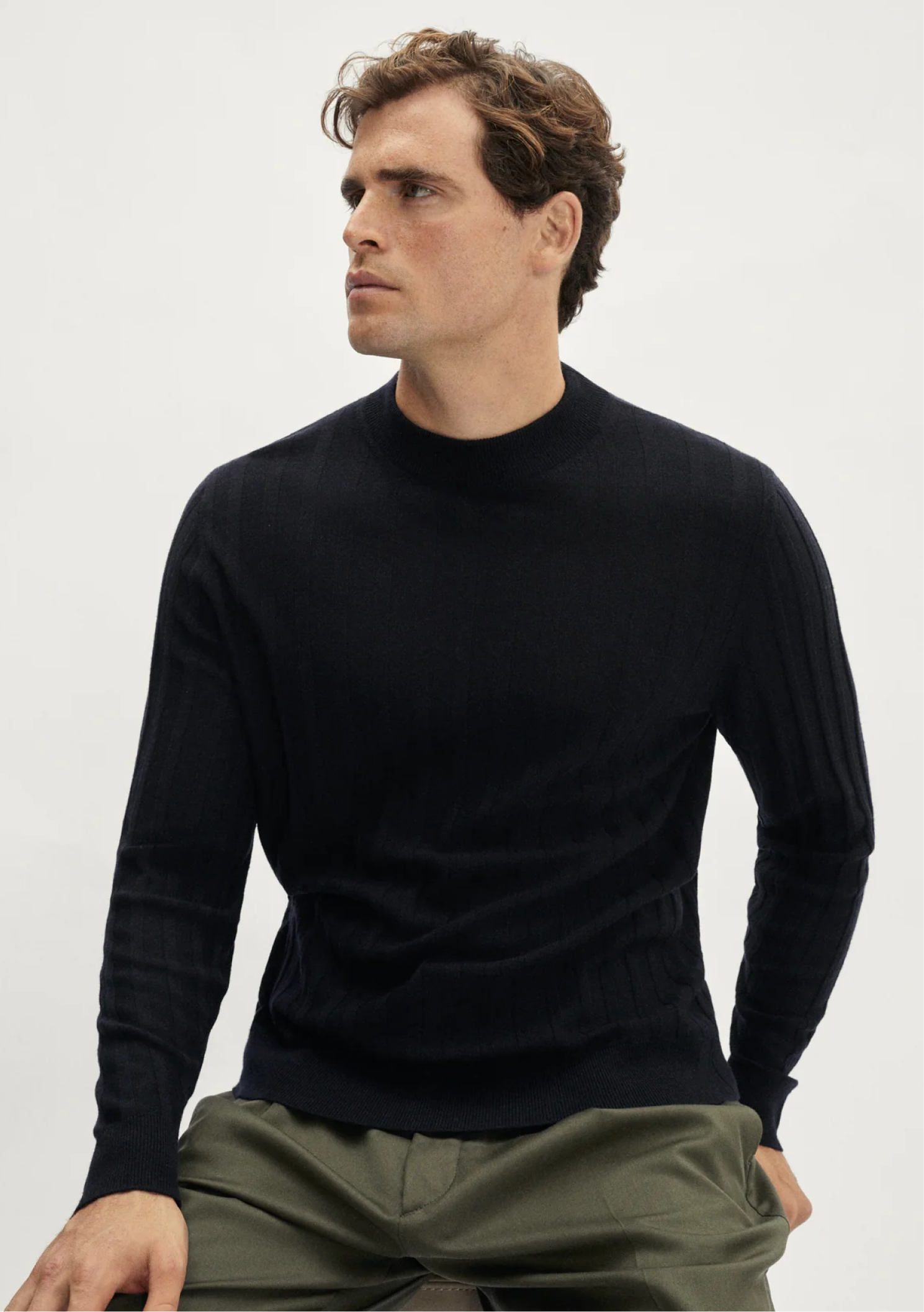


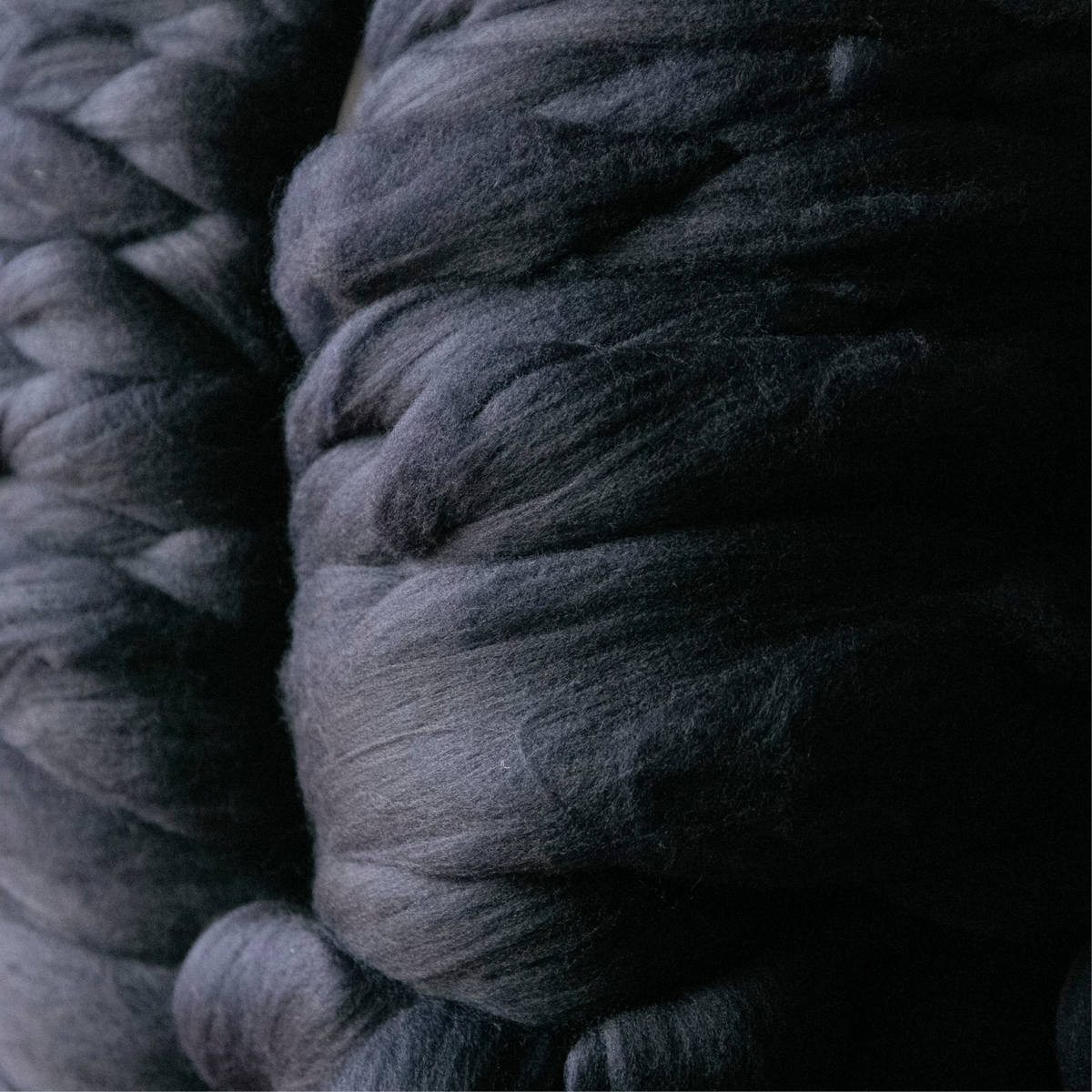
At Artknit, we do not choose Merino Wool for seasonal reasons: it is one of the fibres on which we have built our knitwear and which our customers wear throughout the year. Its natural ability to adapt to different climate conditions makes it one of the most versatile fibres: it is found in the warmest pieces designed for winter, as well as in lightweight constructions dedicated to transitional seasons and milder days.
The secret lies in the structure of the fibre. Merino Wool fibres have a natural crimp that creates microscopic air pockets: in cold conditions they help retain body heat, while when the temperature rises they encourage the dispersal of excess heat. Added to this is the ability to absorb water vapour and release it gradually into the environment, maintaining a dry sensation against the skin. It is the balance between thermoregulation and moisture management that makes Merino Wool a naturally suitable fibre to wear in every season.
The structure of the fibre also helps limit the formation of unpleasant odours. Merino Wool absorbs moisture and creates an environment that is unfavourable to the proliferation of odour-causing bacteria, making it possible to wash pieces less frequently than many everyday fabrics.
Wearing a sweater several times before washing it means reducing the number of wash cycles and, consequently, the consumption of water, energy and detergent.
A scientific study on the life cycle of a Merino sweater (Wiedemann et al., The International Journal of Life Cycle Assessment, 2021) identified 14 uses per wash as a realistic "best practice" frequency for a wool sweater, compared to the single use per wash adopted by around 10% of consumers. The same research group estimates an average consumption of approximately 43 litres per wash cycle at optimal load. A simple calculation: every wash avoided corresponds to approximately 43 litres of water saved — skipping 10 washes in a season equals approximately 430 litres of water.
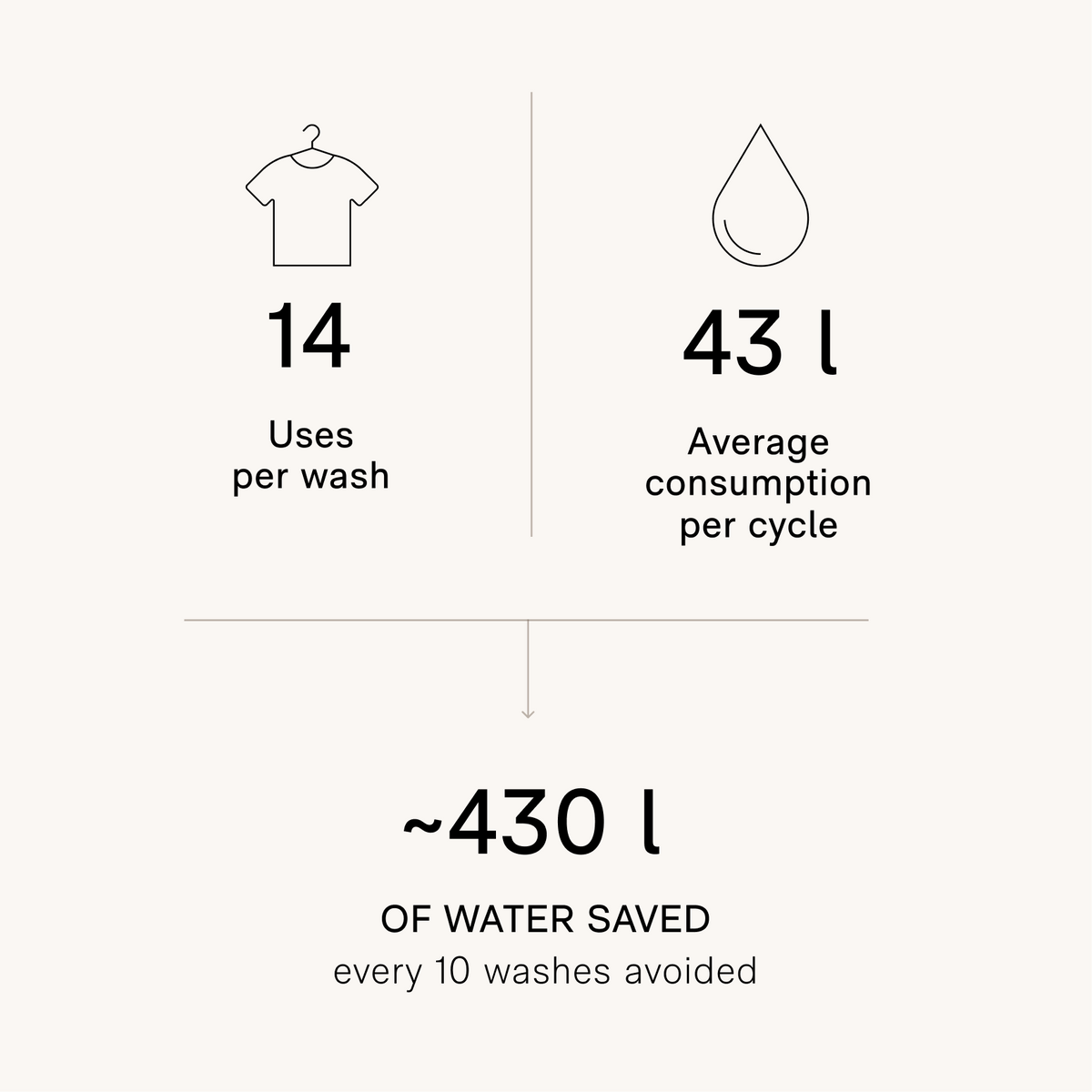
A simple care habit that helps preserve the garment for longer and reduce the resources used in its upkeep.
Unlike more traditional wools, Merino Wool is composed of much finer fibres, whose diameter is measured in microns. The finer the fibre, the softer and more comfortable the fabric surface feels against the skin, reducing the itching sensation that can be associated with fibres of greater diameter. To better understand this difference, a comparison is more meaningful than an isolated number:
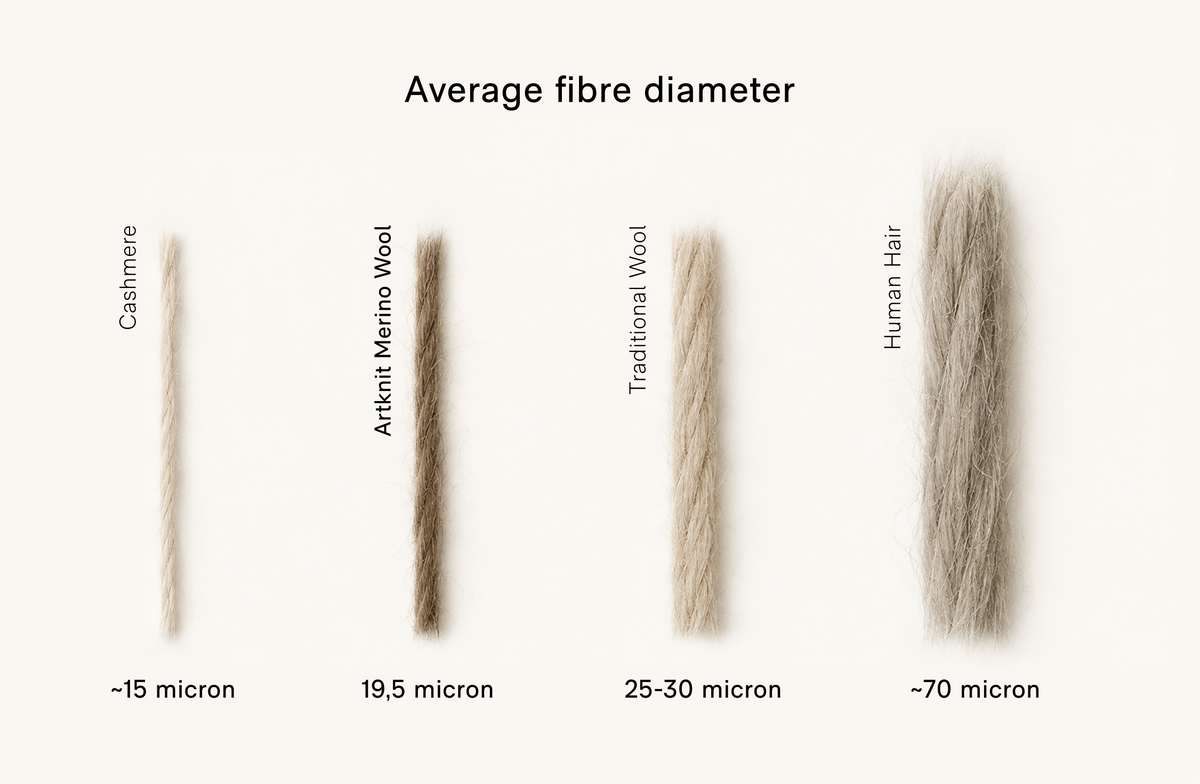
Our Extrafine Merino Wool undergoes a combing process that selects the longest and finest fibres and aligns them in parallel. The fibres thus form a continuous ribbon, called a top, which is subsequently twisted to obtain a strong, smooth and compact yarn with a naturally silky texture.
Our model is manufacturer-to-consumer: we directly follow the path of the raw material through to the finished garment, reducing intermediaries and maintaining
a direct relationship with those who take part in its creation. It is this control of the Supply Chain that allows us to tell, step by step, where each sweater comes from and how it takes shape.
The raw material comes from Australia, from Merino breed sheep. Spinning takes place in Poland and Italy, where we collaborate with specialised partners such as Tollegno 1900, in the heart of the Biella wool district. Here manufacturing expertise, research and attention to the material come together to transform
the fibre into high-quality yarns.
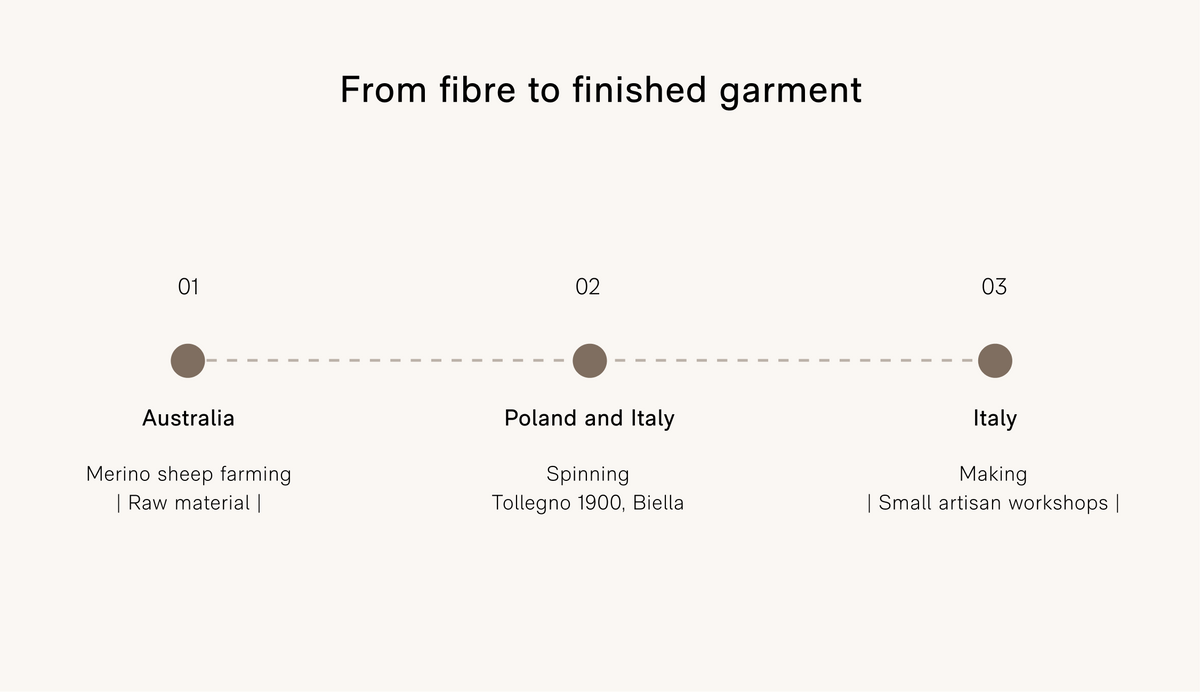
The making of the garments takes place entirely in Italy, in small family-run artisan workshops. Every step contributes to the final result: from the quality of the fibre to the spinning, from the knit construction to the hands of the artisan. A direct approach to production that allows us to maintain high quality standards and offer a traceable Supply Chain, without losing the connection with the people and places that make every piece unique.
The versatility of Merino Wool is also expressed through different constructions. By changing the yarn gauge, the twist and the knit construction, the same fibre can take on very different weights, textures and fits. In our selection, this translates into three distinct lines:
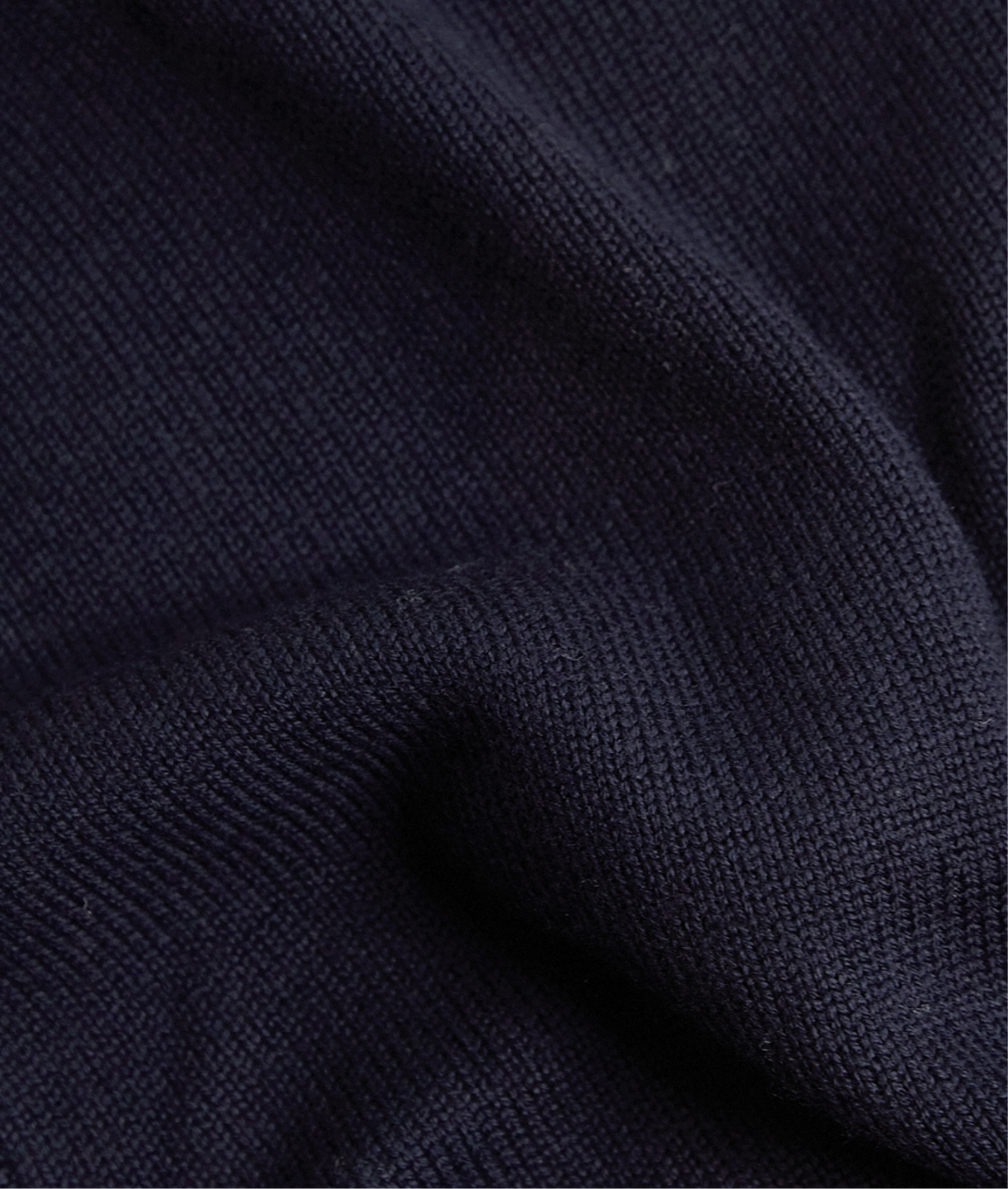
Extrafine Merino Wool
Lightweight, smooth and silky. Ideal for those looking for a travel or office piece, to be worn alone or under a jacket.
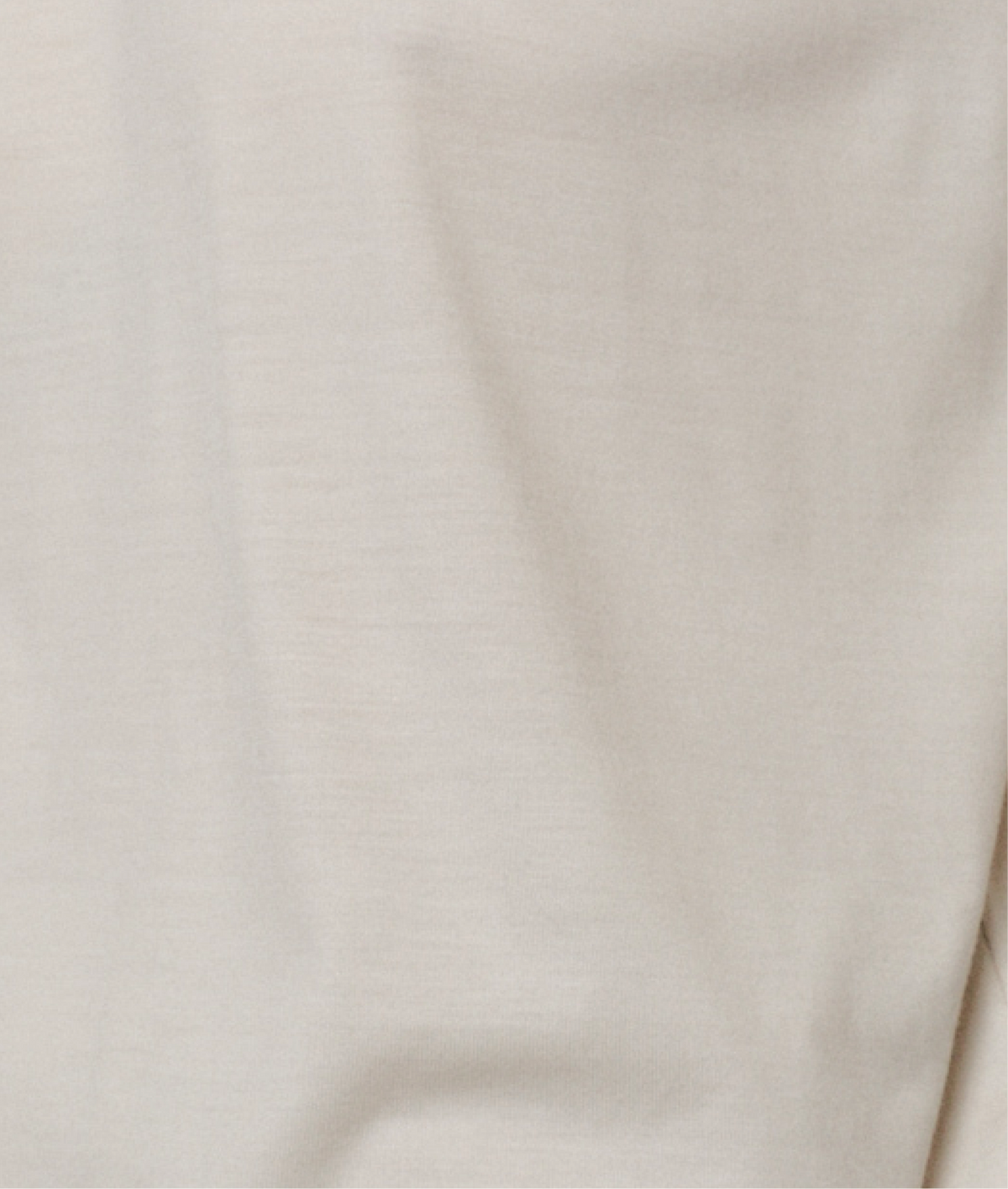
active wool
Designed for pieces to be worn in direct contact with the skin, it combines the natural properties of wool with a construction suited to movement. A choice for those seeking comfort, thermoregulation and freedom during more dynamic days.
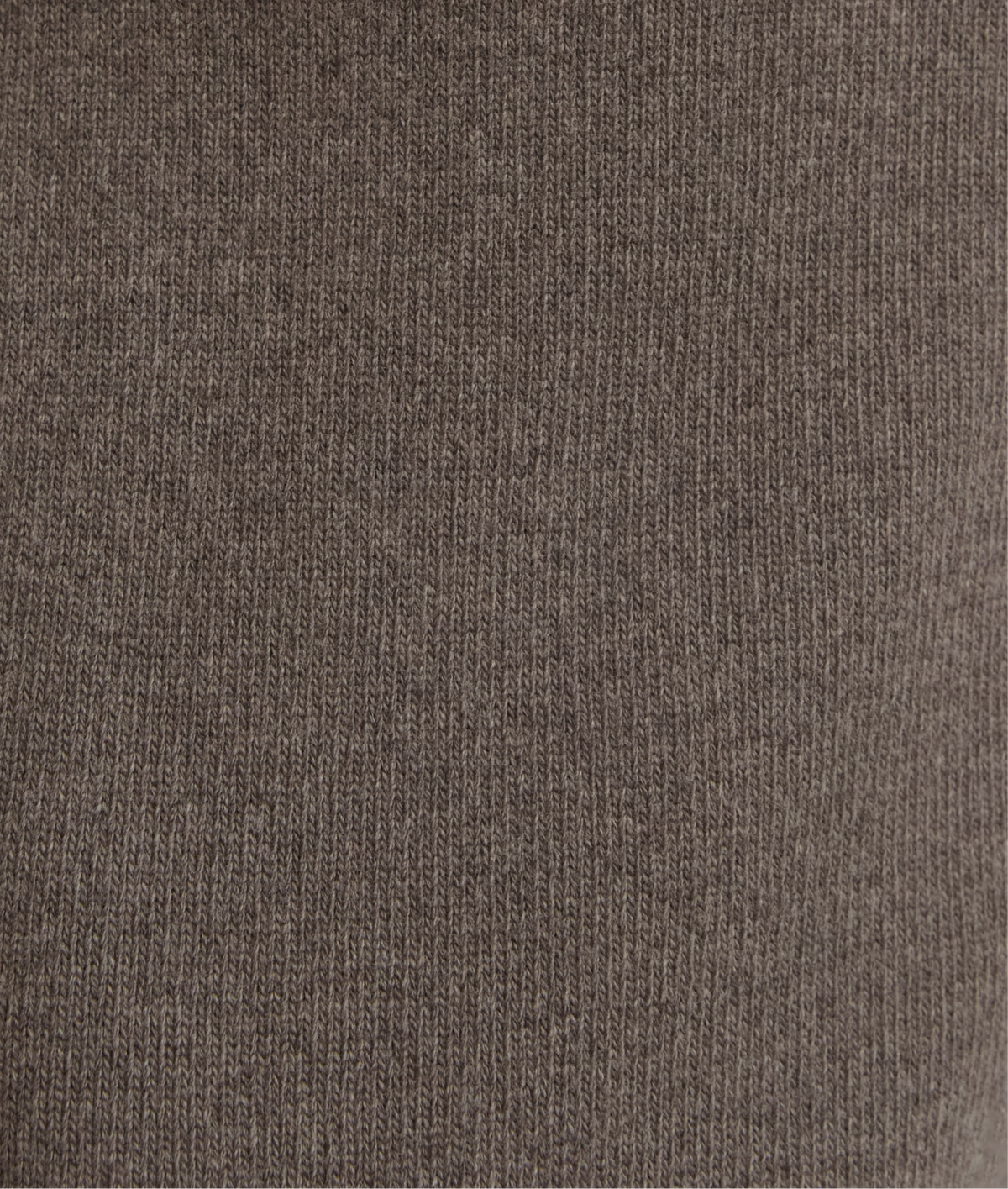
Chunky Wool
Soft, warm and naturally voluminous, it is designed for the coldest temperatures and for more enveloping and structured knits.
A well-cared-for Merino Wool garment can accompany you for a long time, maintaining its natural characteristics over the years.
A few simple precautions are all it takes:
Frequency
Wash the garment only when truly necessary. After several uses, it is often enough to let it air out.
Temperature
Use cold water or a maximum of 30°C, choosinga gentle cycle or hand washing with a specific wool detergent.
Drying
Avoid the tumble dryer and direct exposure to sunlight. Leave the garment to dry flat, away from heat sources, to preserve its shape and structure.
PILLING
The formation of small balls on the surface
is a natural phenomenon related to use and friction.
They can be gently removed with a comb or a dedicated pilling razor.
Storage and moths
Store clean garments folded, avoiding hanging them. To protect them from moths, prefer natural remedies such as lavender and cedar rather than mothballs.

Since 2024, the Merino Wool we use for our knitwear has been certified RWS - Responsible Wool Standard, the standard developed by Textile Exchange to guarantee respect for animal welfare, the protection of farming territories and responsible working conditions throughout the Supply Chain, from the rearing of the sheep to the finished product.
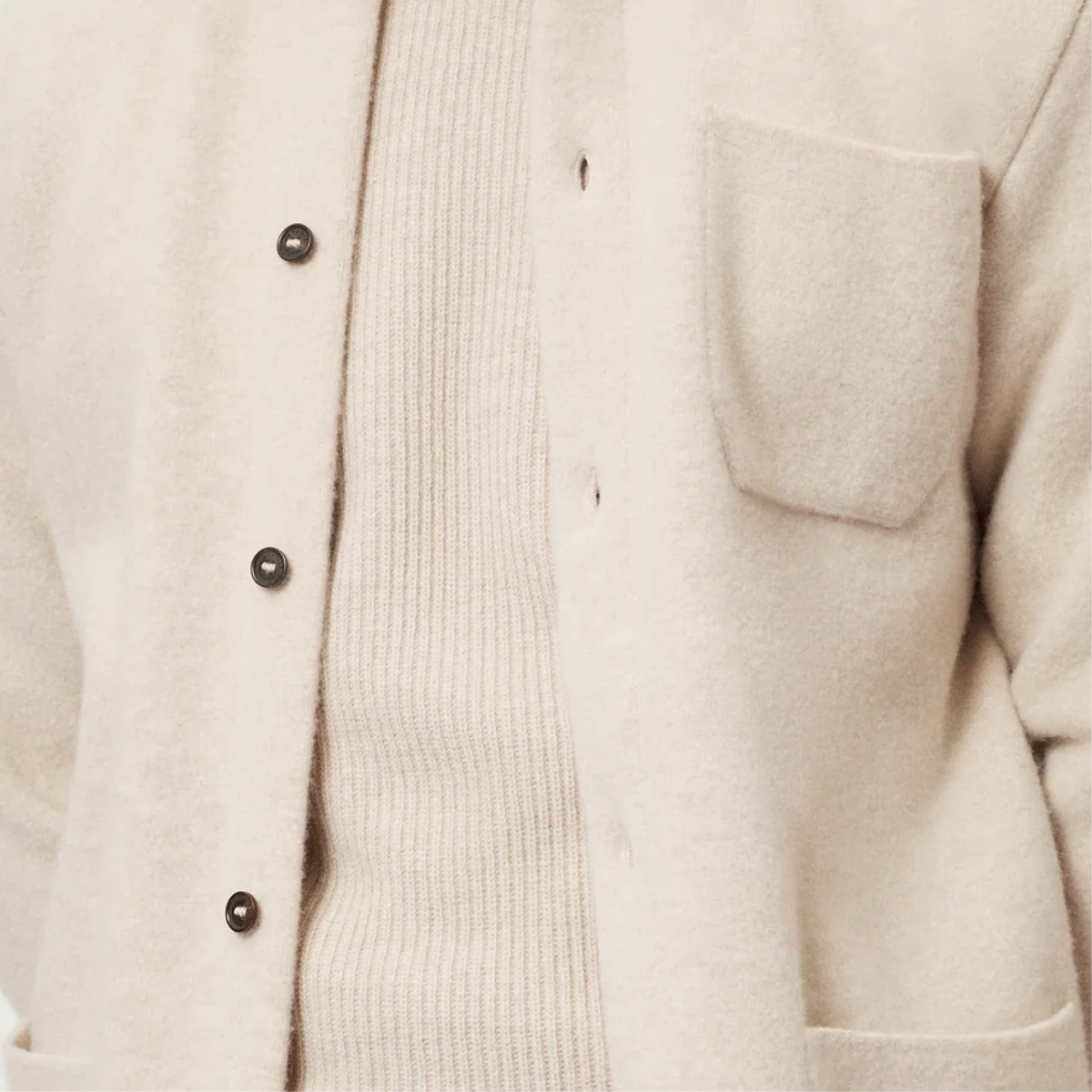
The RWS is based on the Five Freedoms of animals and explicitly prohibits mulesing, an invasive and painful practice historically used to prevent certain parasitic infections in sheep. Our Merino Wool is mulesing-free, a commitment verified through an independent certification system and not simply declared by the brand.
Added to this certification is the Woolmark, which verifies the quality of the wool through specific fibre checks and tests on yarn characteristics, including strength and colour fastness.
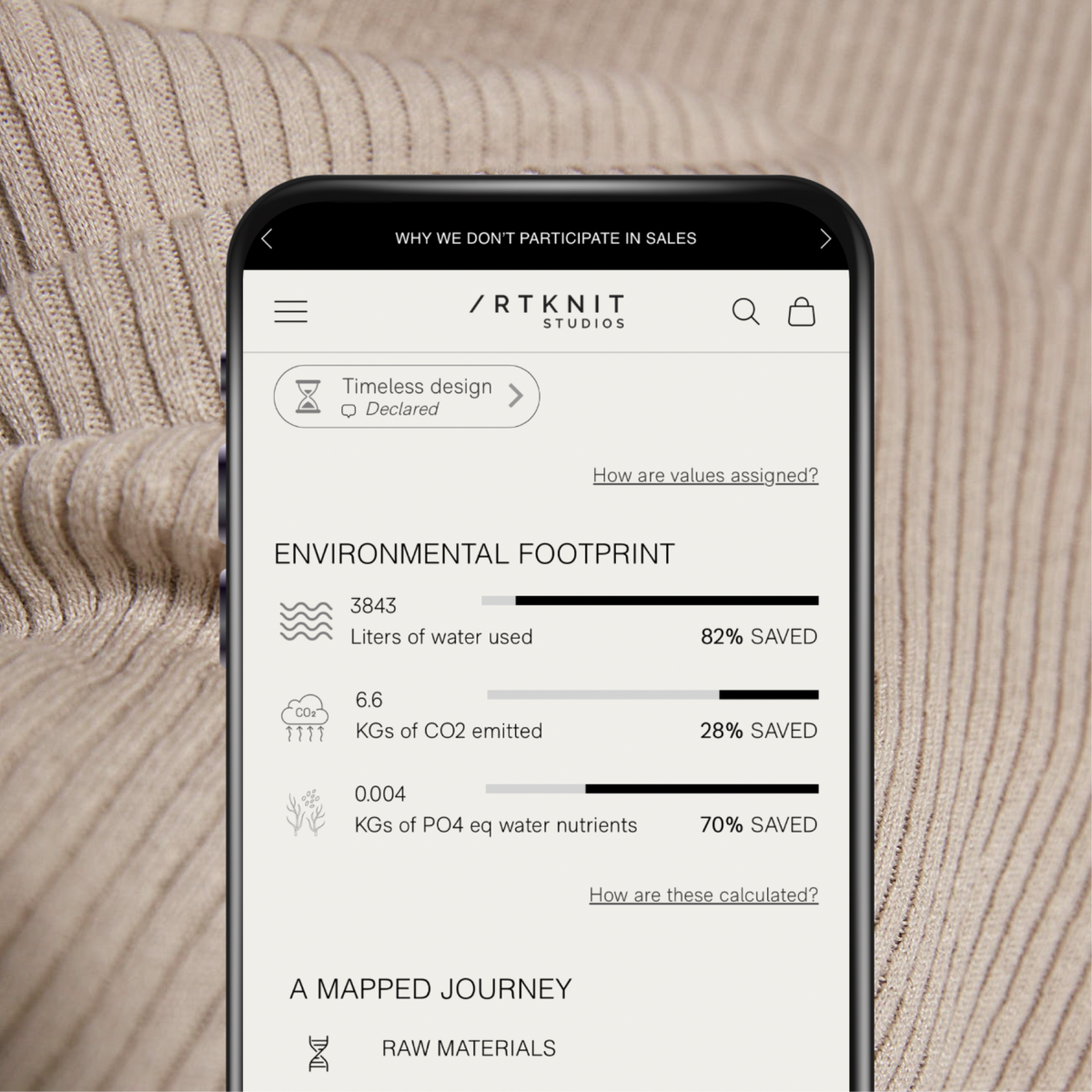
As a B Corp certified company, we work to make the Supply Chain increasingly transparent. Every Artknit piece is accompanied by a digital product passport that allows you to follow its journey and learn about the people, places and materials that contributed to its creation.
Merino Wool is a natural, renewable and biodegradable fibre: sheep naturally produce a new fleece every year and, at the end of its life cycle, the fibre can decompose without leaving microplastics in the environment. It is also one of the most recycled natural fibres in the textile sector.
Choosing quality Merino Wool therefore means investing in a material designed to be worn for a long time. With the right care, a garment retains its characteristics over time and can travel through multiple seasons, adapting to both the coldest temperatures and the mildest days.
FAQ
No, or far less than traditional wool. Itching depends on the diameter of the fibre: the finer it is (measured in microns), the softer the surface in contact with the skin. Extrafine Merino Wool has a much finer diameter than traditional wool, which significantly reduces the sensation of irritation.
Yes, on a gentle cycle, with cold water or a maximum of 30°C and a specific wool detergent. The tumble dryer should be avoided: it is better to let the garment dry flat, away from direct heat sources.
Yes. The structure of the fibre regulates body temperature in both cold and warm conditions, encouraging the dispersal of excess heat and maintaining a dry sensation against the skin thanks to its ability to absorb and gradually release moisture.
They are not in direct competition: they are fibres with different characteristics. Cashmere is generally finer (around 15 microns compared to the 19.5 of our Extrafine Merino) and has a softer hand, but Merino Wool offers better thermoregulation, greater durability and requires less care over time.
It means the wool does not come from farms that practise mulesing, an invasive practice historically used to prevent certain parasitic infections in sheep. In the case of our wool, this commitment is not a brand declaration but a requirement verified by an independent certification body under the RWS standard.
There is no fixed rule, but generally it should only be washed when truly necessary: after several uses it is often enough to let it air out. A scientific study on the life cycle of a Merino sweater identified 14 uses per wash as a realistic best practice frequency.
SOURCE:
The Woolmark Company
Textile Exchange
Wiedemann et al.
Artknit Studios

WORLDWIDE SHIPPING AND EASY RETURNS
Shipping is free within the EU for orders over €250. Size exchanges are free in the EU, and returns are quick and easy, with our customer service ready to assist you.

ORDER ONLINE AND PICK UP YOUR ORDER
Choose between in-store pickup or InPost 24/7 Locker & Pickup Points at checkout, and collect your order whenever and wherever it suits you best with no shipping costs for in-store pickup.

PAY A LITTLE AT A TIME
You can pay directly from our website in three monthly installments without interest, by selecting Scalapay at checkout and creating an account in just two minutes.

DIGITAL PRODUCT PASSPORT
You can always know who crafted your piece and where the raw material came from by going through its journey on every product page.

THE REPAIR PROGRAM
The Repair Program aims to make your Artknit’s pieces look as good as new, in order to reduce waste and extend your knits’ lifecycle.